
Predators
As well as keeping plant pests (weeds) under control there has been continual effort in Trelissick Park over the years in keeping animal pests (predators) under control.
The Wellington Regional Council (Greater Wellington) has been very proactive for many years in regional predator elimination and control, as has the Wellington City Council within City parks and reserves.
Bait stations were introduced into Trelissick Park in early 1998 by the Regional Council. Background information on this is contained in Regional Council Predator Control.
As a result there has been little evidence of possum activity in Trelissick Park for the last decade though possums were once a great menace inhibiting native plant regeneration in the Park.
There are ongoing problems with rats, stoats (and other mustelids), hedgehogs, and rabbits. In particular, rats and stoats kill native birds and eat their eggs in nests.
To a lesser extent, mice can be considered predators as well as feral cats anywhere in the Park and some domestic cats on Park boundaries near residential areas.
Dogs, off-leash and off-track and not under control, can be fatal for fledgling native birds.
And it should be mentioned that there are a very small minority of the human visitors to the Park who damage or destroy the native fish and eels and the native birds or their habitat.
Camera Sightings of Intruders
In September and October 2017 a Victoria University MSc student conducted a study of animal intruders into a portion of Trelissick Park using a dozen motion activated cameras. Some 40,000 images were recorded and evaluated. The cameras were 10m or 20m off track to eliminate any track users.
The following list gives the numbers of confirmed free range animals (excluding birds):
- 9 rodents
- 56 hedgehogs
- 337 dogs
- 50 cats
- 68 rabbits
- 0 mustelids
Below you can read more about the project.
Pest animals in Trelissick Park
Pest species in the park can include:
Possum Trichosurus vulpecula
Mustelids:
– Ferret Mustela furo
– Stoat Mustela erminea
– Weasel Mustela nivalis
Norway rat Rattus norvegicus
Ship rat Rattus rattus
Hedgehog Erinaceus europaeus occidentalis
Hare Lepus europaeus occidentalis
House mouse Mus musculus
Feral rabbit Oryctolagus cuniculus
Feral and unwanted cats Felis catus
Off-leash and off-track dogs Canis lupus familiaris
TPG Volunteer efforts
Ongoing bait station servicing was taken over by TPG volunteers in 2008 and has been carried out in partnership with the City and the Regional Councils. Generally the bait stations are visited monthly for replenishment as necessary. Mustelid traps (DOC200) were also introduced into the park in 2008 and are also checked monthly by volunteers for victims and/or resetting as needed.
We currently have six volunteers - each of whom do monthly rounds of their allocated traps and stations when they can.
The possum/rodent bait for many years was 'pellet' bait. In 2016 the bait was changed to be 'block' bait - to lessen the chance of pellets being dislodged from the bait stations and to lessen the chance of hoarding by rats. The block bait is designed mainly for rodents.
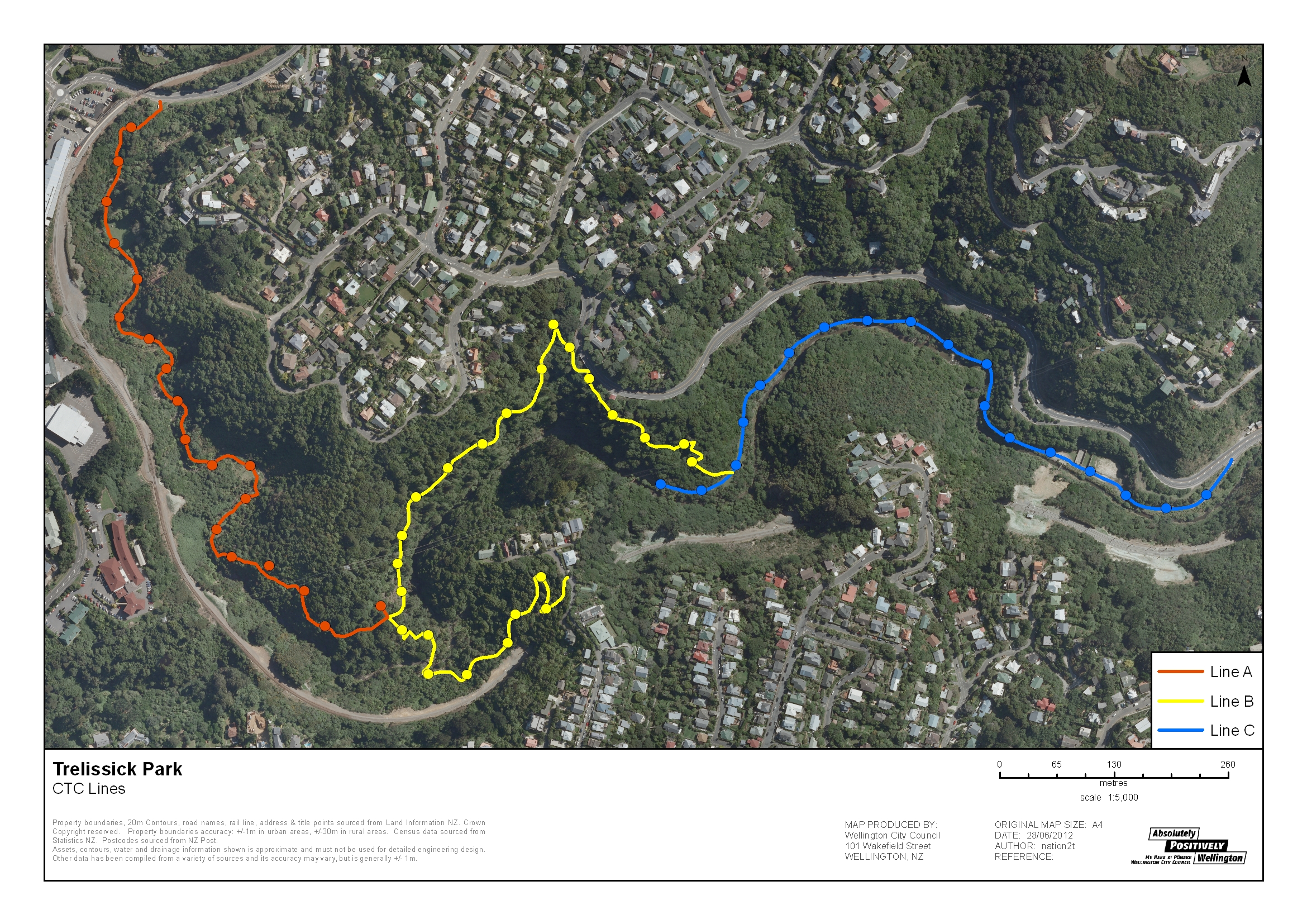
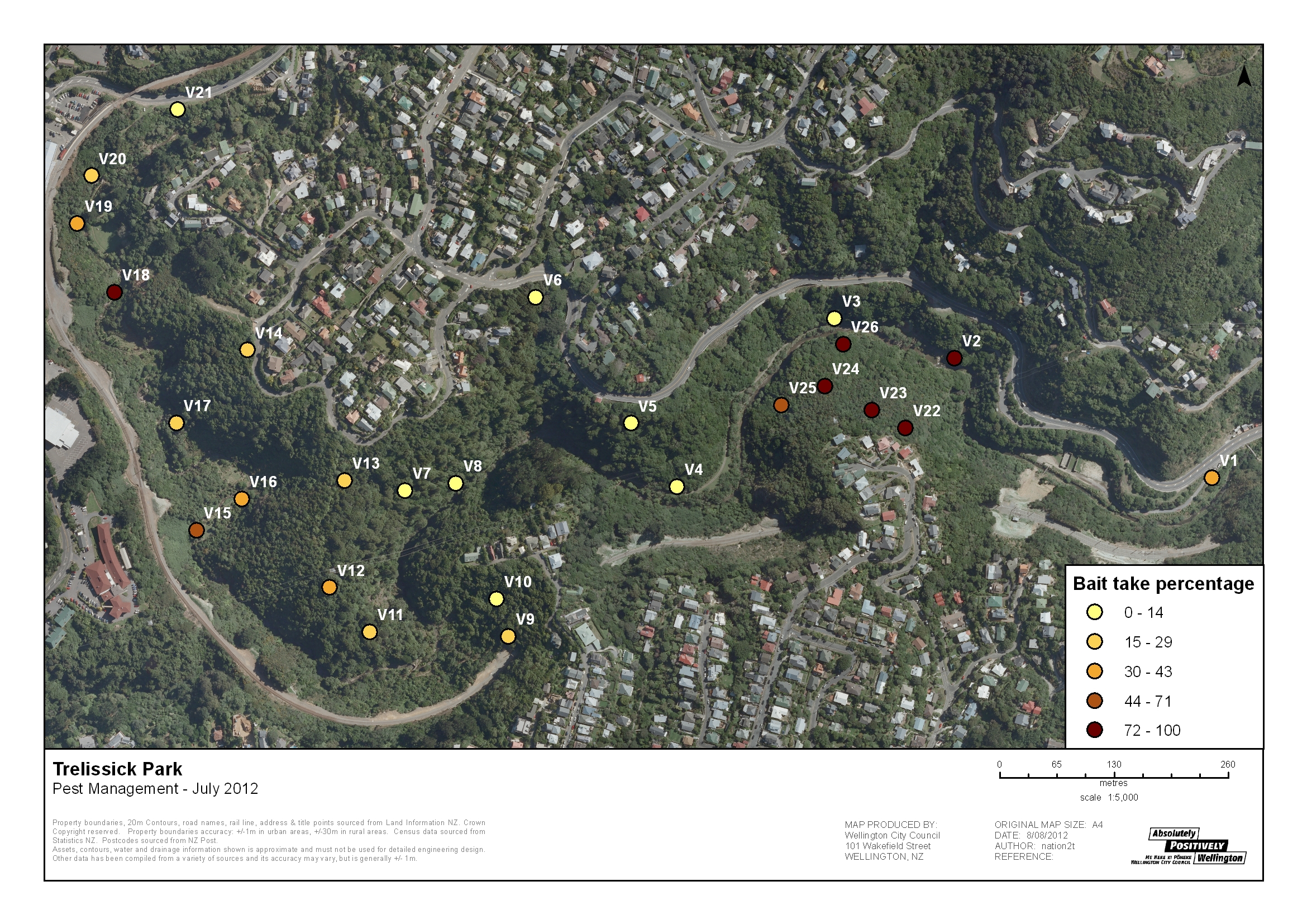
Monitoring trials by Victoria University (chew cards, tracking tunnels, and night motion-sensitive videos) have identified interesting pest animal behaviours and distribution patterns. There were 60 chew card locations on three chew lines as shown on the Chew Card Locations Map (July 2012 update) and the locations were visited monthly for a year to replace the chew cards and to ascertain which predators had visited.
For Wellington City Council information on how volunteer efforts can help in reducing animal pests see:
For Regional Council guidelines for volunteer health and safety, see:
For Regional Council guidance on station installation and maintenance, see:
Bait Stations
Bait station and mustelid trap locations can be seen on the following maps:
- Updated map of bait and baitsafe stations and mustelid traps (April 2018)
- Updated map of bait stations and mustelid traps (January 2016)
- Bait Station locations (July 2012)

We currently have about 30 bait stations in operation, 16 DOC200 mustelid traps, 11 A24 stations and 20 Bait Safe possum stations (serviced by the Regional Council). In addition to these we also have ten of the Victor rat traps in wooden tunnels located. between the Oban Bridge and the Debris Trap. See below pictures for exampes of each of these.
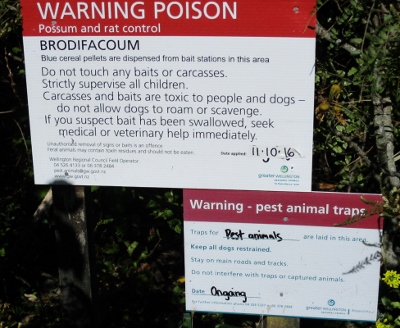
Beware !!
Keep children and dogs under your control at all times.
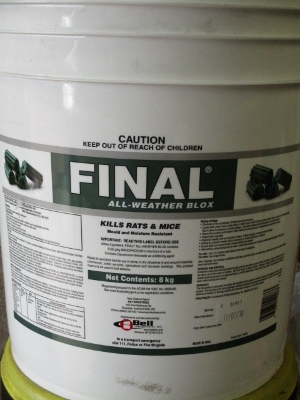
Final Block Bait
Container of Rodent Bait (block bait).
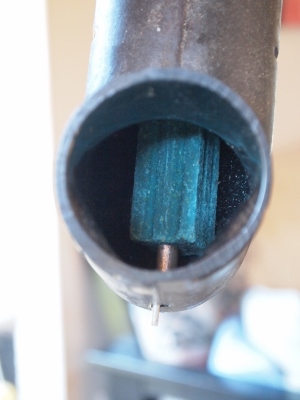
Bait Station
Bait Station in action (with block bait).
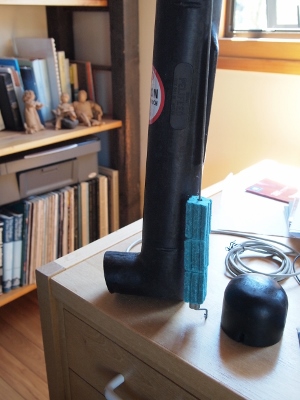
Bait Station
Bait Station showing block bait on wire.
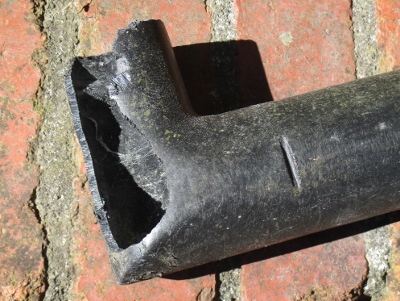
Damaged Bait Station
Bait Stations are sometimes as tasty as the bait.
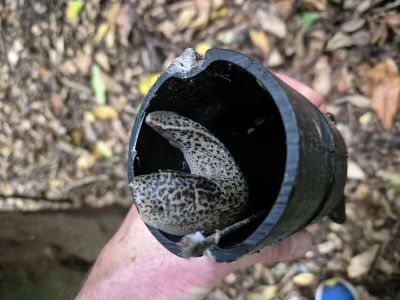
Leopard Slug visitor
Bait Stations sometimes provide a home for visitors (Leopard Slug this time).
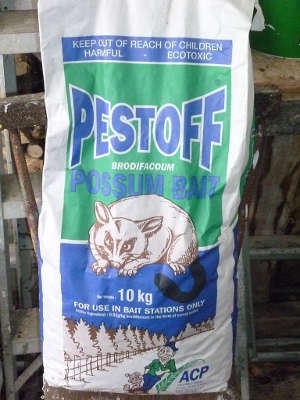
Pest Off (pellet bait)
Bag of Possum/Rodent Bait (pellets, no longer used for rats).
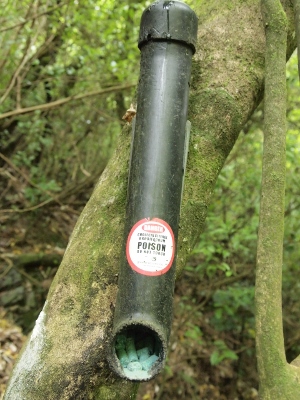
Bait Station
Bait Station in action (previous when pellets were used for rats).
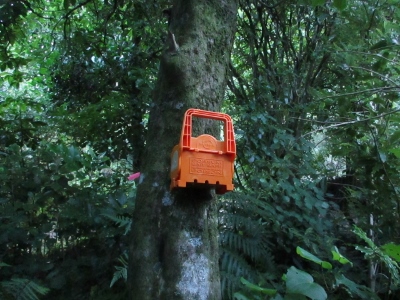
Baitsafe Possum Station
Baitsafe Station in action (for possums only - rats need not apply).
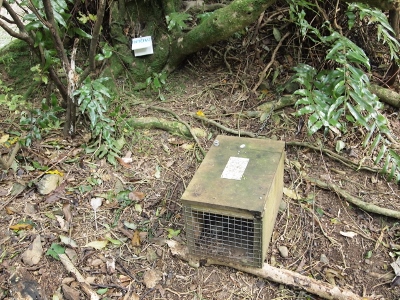
Mustelid Trap (DOC200)
DOC200 Station.
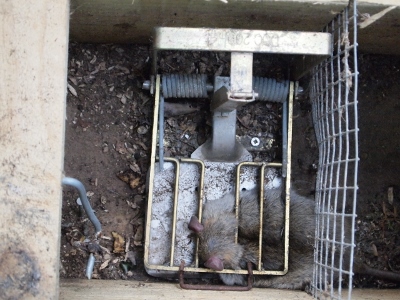
Deceased Trelissick Park Rat
One less predator!
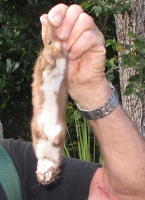
Deceased Trelissick Park Stoat
One less predator!
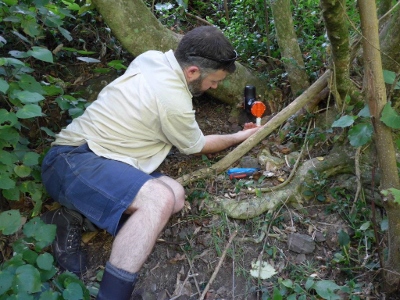
Trial of Goodnature A24 trap
Installation of A24 trap.
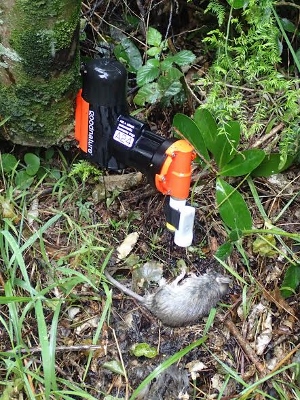
Success with the A24 trap !
A24 success! One less rat!
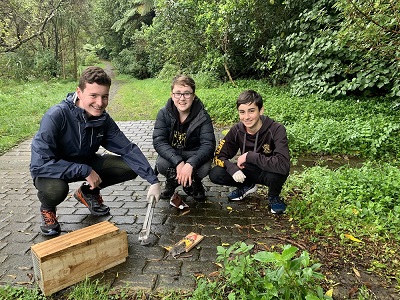
Scots College student project
Scots College student project (winter months of 2022) with ten Victor rat traps in wooden tunnels. Their ten traps now being looked after by Predator Free Khandallah.
A sample video showing some rats in action.

Trelissick Park Group
Page last updated: 28 April 2024